
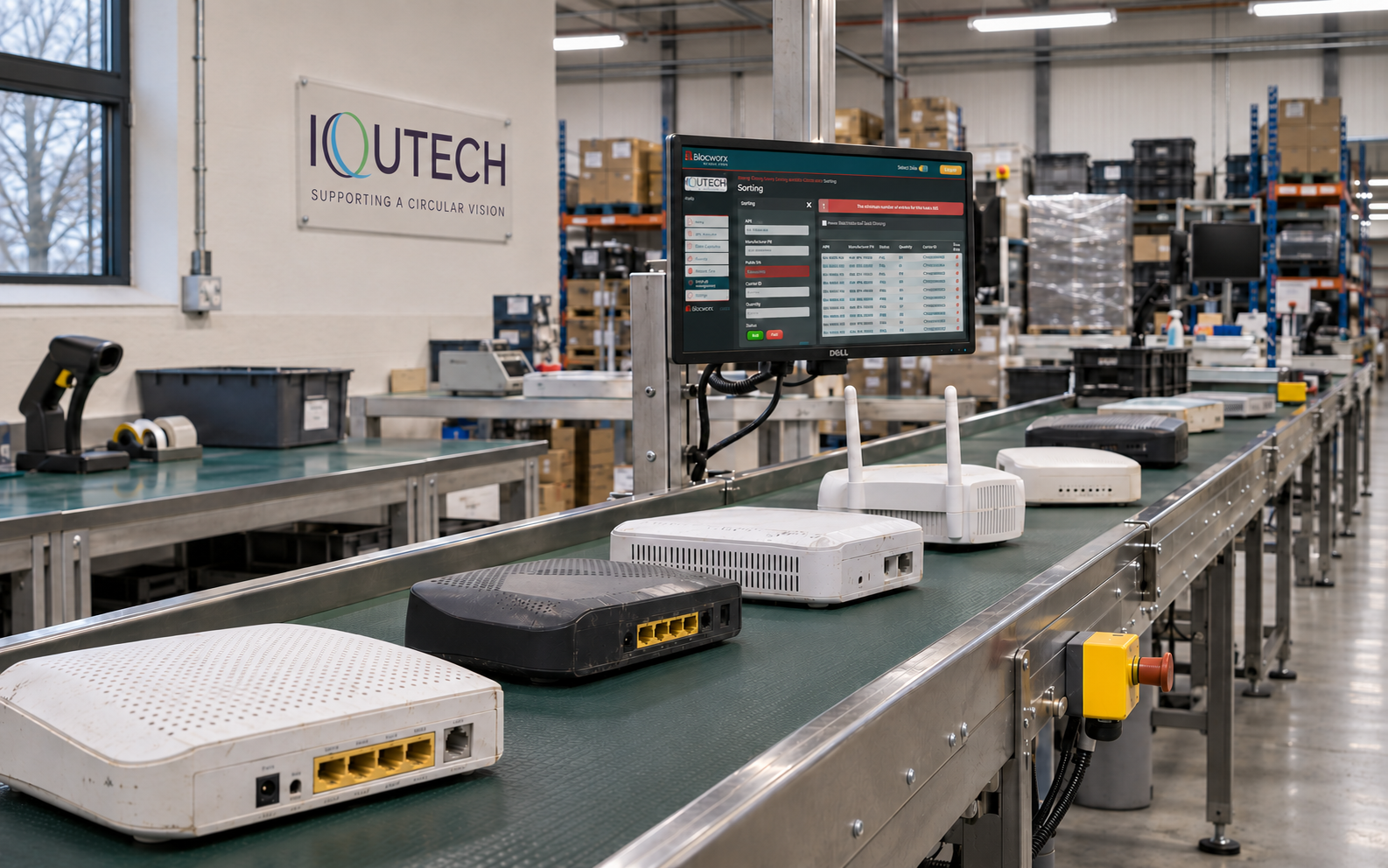

IQUTECH’s operation and QMS
IQUTECH is a Limerick-based specialist in electronic repair and refurbishment. Its services include returns management, failure analysis, refurbishment and product recall management across EMEA and the USA.
For eir, IQUTECH handles equipment ranging from broadband modems, Wi-Fi routers and TV set-top boxes to 4G/5G mobile broadband units and higher-value network and power equipment. Each device is tracked by serial and part number.
Those operational records also feed IQUTECH’s quality management system. The information captured as devices are received, tested, repaired and dispatched provides evidence of how the processes are being followed and how they are performing.
Why circular operations matter
Testing, repairing and reusing returned equipment keeps products in service for longer and helps recover their value. It also produces information on failure modes, turnaround times, reuse and scrap that can support customer reporting and sustainability reviews.
The situation before
As IQUTECH’s RMA operation grew, three different types of work had to be managed alongside one another:
- FMS RMA: high-volume returns of customer-premises equipment, including modems, routers and gateways.
- Fixed-stock RMA: lower-volume, higher-value network and power units used in the operator’s infrastructure.
- Ad hoc jobs: irregular batches and urgent test, repair or refurbishment campaigns.
These streams were tracked through different spreadsheets, emails, paper forms and manual steps on the shop floor. Keeping the records together became harder as volumes and requirements increased.
Challenges for quality and operational control
There was no single view of work in progress by stage, age and service-level deadline. Teams had to piece together information from scattered records, and delays could become visible only when a shipment was already late.
Standard returns and urgent batches competed for the same capacity, without priorities being visible in one place. Fixed-stock work and special campaigns could absorb resources needed for normal FMS returns.
Preparing quarterly reports took days. Ad hoc jobs were not always fully costed, and maintaining a clear picture of every batch required considerable manual effort. Bringing together the evidence needed to review completed checks and process performance depended on the same scattered records.
The goal: quality evidence from day-to-day work
The aim was to bring intake, diagnostics, repair, refurbishment, dispatch and reporting into one configurable platform. FMS RMA, fixed-stock RMA and ad hoc jobs needed distinct processes, with a shared view of the operation.
For operations and management, that meant being able to see where each item was, what needed to happen next and which work needed attention. Capturing checks and results as the work was carried out also gave the quality system a direct source of evidence, linked to the relevant item and activity.
How daily work feeds the QMS
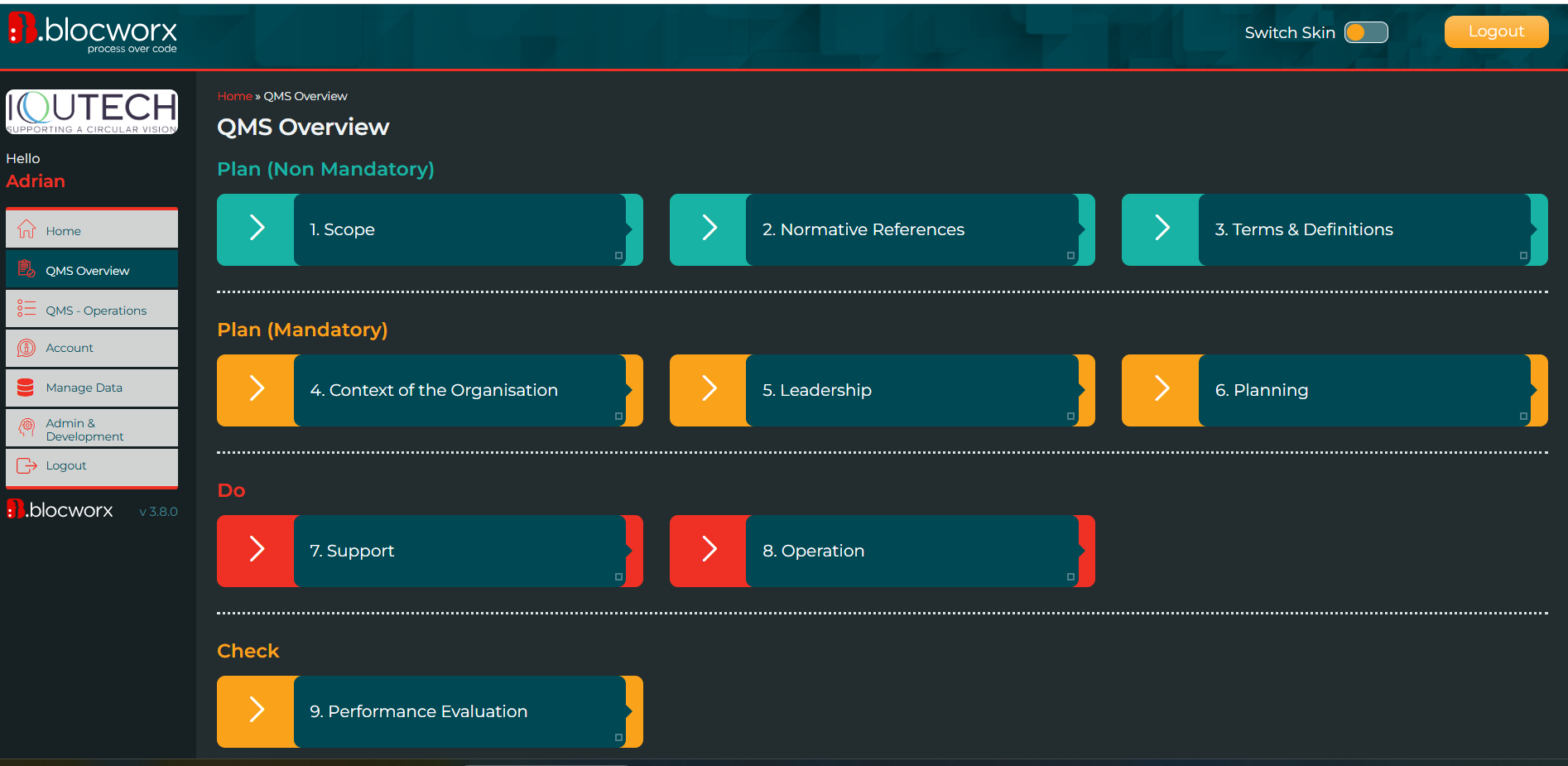
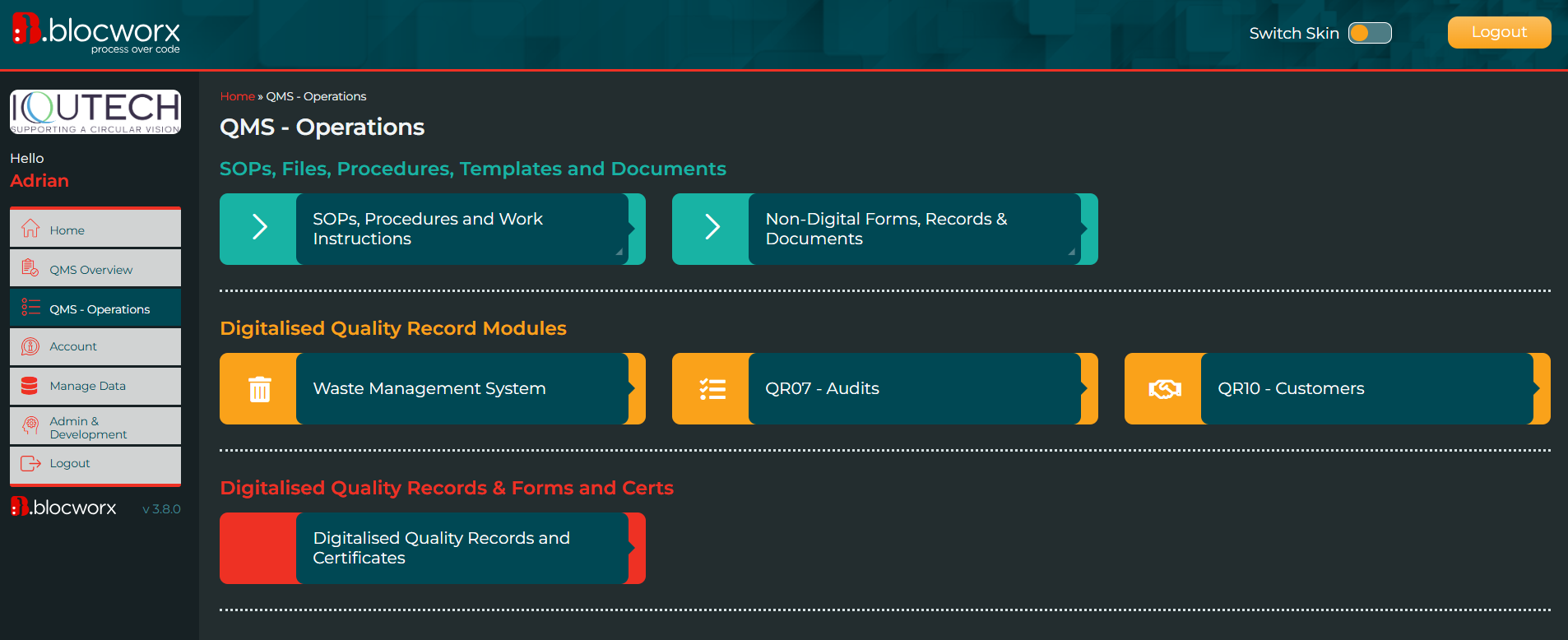
IQUTECH uses Blocworx to organise its QMS and to capture the activity that informs it. Records from intake, diagnostics, repair and final testing provide evidence of what happened, the checks completed and the results. Quality reviews can draw on the operation’s own records when assessing performance and identifying improvements.
Searchable procedures and work instructions
Procedures, work instructions and supporting documents are stored and searchable in Blocworx, with archiving to retain earlier material. The relevant instructions can be made available anywhere in the system, including RMA and other operational areas outside the QMS. Staff can find the document they need in the context of the work they are carrying out.
Training rules at the point of work
Training records feed configured Blocworx rules that determine whether a person can carry out a particular activity. Where required training conditions are not met, the action can be blocked until the requirement is satisfied. The training record is used within the working process, as well as being retained as QMS evidence.
Putting the quality system into practice
The end-to-end flow was mapped with the team, from device arrival through to shipment or stock. Blocworx was configured around the three RMA streams, so the records needed for operational control and quality management could be captured in the same process.
- Intake and identificationA single record for each RMA item, with its customer, device type, serial and part number, batch, fault category and SLA due date.
- Diagnostics, repair and quality checksStructured checks covering diagnostic steps, repair actions and final functional tests, recorded against the relevant item as evidence for traceability and quality reviews.
- Ad hoc work and prioritiesCampaigns and special jobs managed in Blocworx, with rules for priority alongside the standard returns operation.
- Visibility and reportingStatus dashboards for the shop floor, account or client view, and management. The same records support quality reviews, customer reporting and circular-economy reporting.
Balancing quality controls and usability
The fixed-stock RMA flow needed testing. The practical consideration was how to balance workflow detail with usability for the people carrying out the work.
The aim was to fit the checks, access to instructions and training rules around the actual operation, making quality evidence part of carrying out the job.
Outcomes for quality management
Blocworx gives IQUTECH a shared system for operational records, procedures and training evidence. The same information supports its QMS and reviews of quality performance.
- Supported ISO 9001 certificationBlocworx supported IQUTECH in achieving ISO 9001 certification by bringing documented procedures, training records and evidence from day-to-day work into its quality management system.
- Operational visibility for quality reviewsTeams can see the status of units across FMS, fixed-stock and ad hoc work, with the underlying records available to inform quality and performance reviews.
- Traceability through the processRecords show who did what, when, and to which unit, helping demonstrate process control and quality to customers.
- Quality evidence from the work itselfDiagnostic steps, repair actions and final tests become part of each item’s history, alongside its operational record.
- More consistent management informationInformation captured during the operation supports reviews of process performance, quality objectives, service levels and circular outcomes.
What other quality teams can take from this
RMA and refurbishment businesses often need different processes for standard returns, high-value assets and special campaigns. IQUTECH’s approach keeps those processes distinct while using the same platform for operational records, procedures, training requirements and quality evidence.
Day-to-day operational activity becomes evidence for the quality management system.